Summary
Guyana is a country of both complexity and irony. It is one of the strongest U.S. partners in the Caribbean. It is a member of the “America’s Shield” initiative and has an economy whose transformational growth is closely tied to an Exxon-Mobil-led consortium of petroleum companies. At the same time, its relationship with the People’s Republic of China (PRC) is among the longest and deepest in the region.
Guyana received relatively little attention from U.S. policymakers or companies until the confirmation of major recoverable oil deposits in May 2015, and even thereafter, principally received attention only from communities of interest in Washington that were focused on petroleum, Venezuela or Caribbean affairs.
As a former British colony which only fully gained independence in 1966, Guyana was one of the poorest countries in the region, a multi-ethnic society which largely whose politics and cooperation with the PRC were defined largely through the lens of the “Global South.” This include developmentally focused cooperation in agriculture, small-scale manufacturing and other areas as early as 1971.
The role of the Exxon-led consortium in developing Guyana’s petroleum resources, combined with a relatively positive interaction with the U.S. government in the political crisis which ultimately brough the People’s Progressive Party – Civic (PPP/C) back to power in 2020, arguably contributed to the importance that the current PPP government of Irfaan Ali has placed on maintaining good relations with Washington. At the same time, the ties built by China with the PPP/C, combined with the enormous inflow of new money with the oil boom, has positioned the PRC and its companies to play a major role in Guyana’s rapidly transforming economy, from petroleum and mining to infrastructure projects to retail.
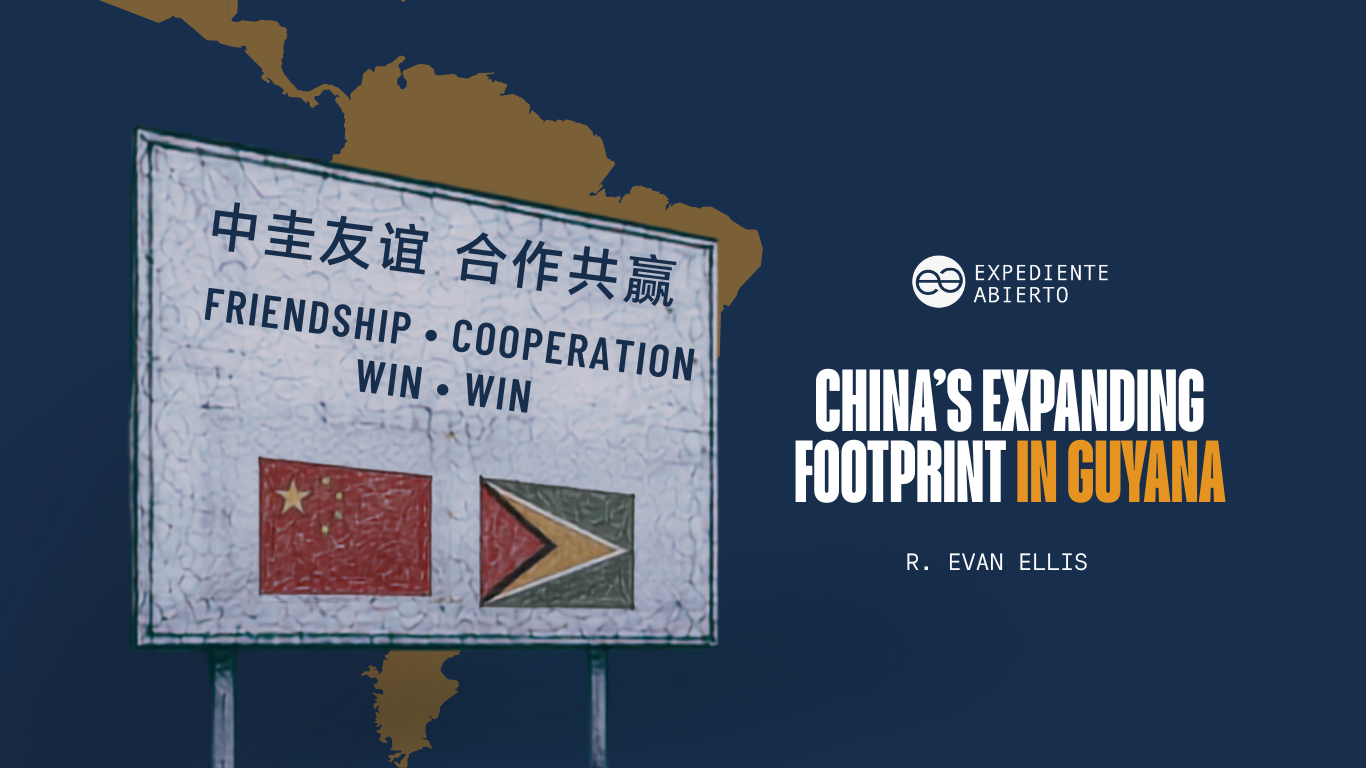
This work looks at that expanding PRC engagement, as the Ali government navigates its relationships with Washington, and with the PRC.